


Master's Entry to Nursing Practice
Why pursue a Master’s Entry to Nursing Practice program at North Central College?
Transform your passion for helping others into a meaningful career through North Central College’s Master’s Entry into Nursing Practice (MENP) program. This direct-entry program provides the opportunity for those with a bachelor’s degree to earn a Master of Science in Nursing (MSN) - no matter what your undergraduate major was. An Accelerated Dual Degree 3 + 2 program is available for current and incoming North Central College undergraduate students.
Guided by expert faculty and grounded in human-centered, interprofessional learning, you’ll graduate prepared for the state licensure NCLEX-RN and to enter professional nursing practice with confidence, compassion, and purpose.
Upcoming Events
Join us for an upcoming virtual or on-campus information session! View event details and sign up here.
Program Overview
- Begins each Fall semester
- Two-year format that includes over 700 hours of hands-on clinical and simulation experience
- Lifestyle Medicine focus that weaves prevention, nutrition, and whole-person wellness throughout the curriculum
- Small cohort size and close mentorship from expert faculty
The North Central Difference: Where Science Meets Humanity
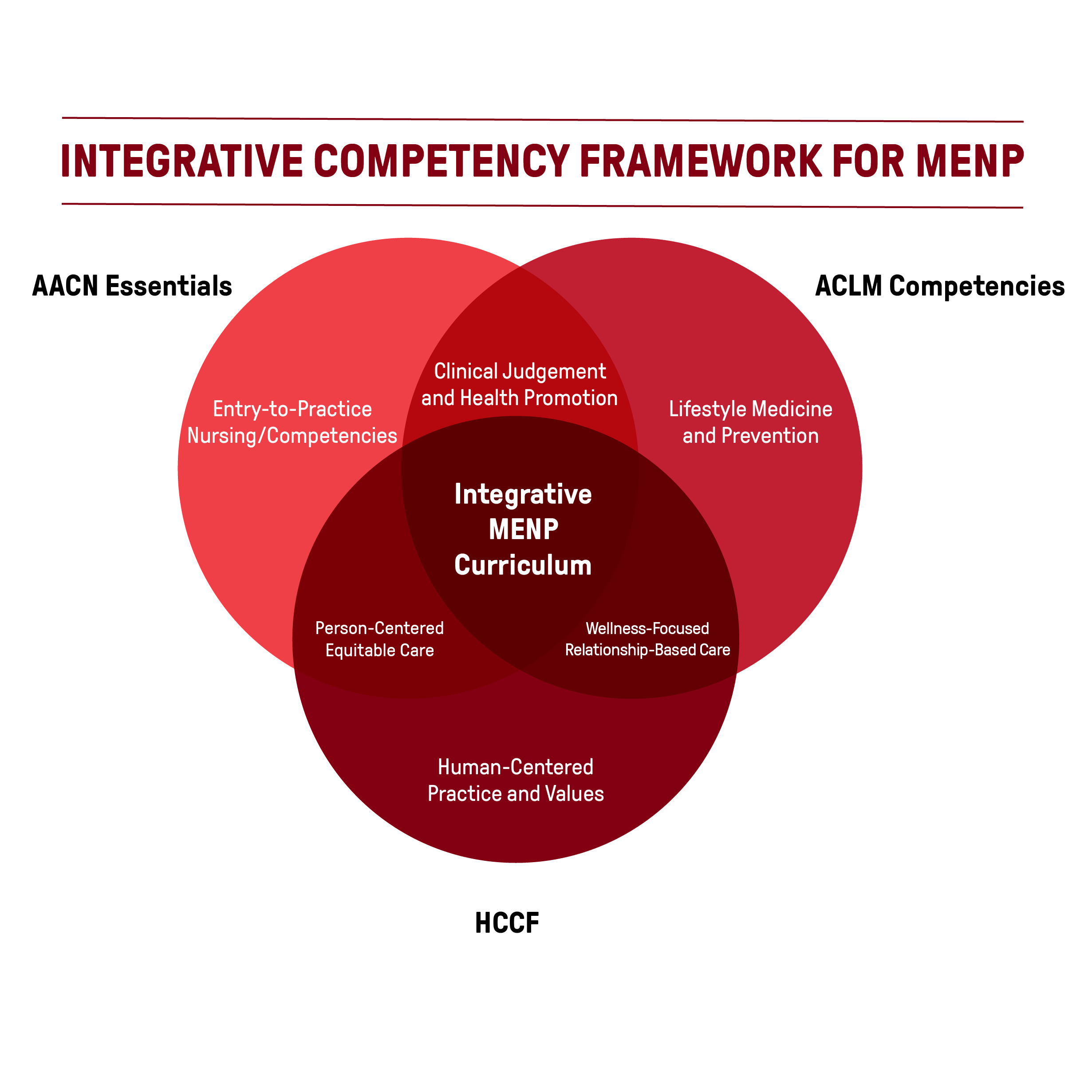
North Central’s MENP program is built on three powerful frameworks that redefine how nurses are prepared for modern practice:
AACN Essentials
National standards for nursing competence and licensure readiness, ensuring you graduate fully prepared for RN practice.
Lifestyle Medicine
One of the few MENP programs in the nation to integrate the American College of Lifestyle Medicine’s six pillars throughout the curriculum. Every course, lab, and clinical experience will include a focus on nutrition, physical activity, restorative sleep, stress management, social connection, and avoidance of risky substances.
Human-Centered Competency Formation
A developmental approach to professional formation that cultivates empathy, resilience, and moral courage through feedback, reflection, and real-world practice.
Interested in becoming a Family Nurse Practitioner or Psychiatric Mental Health Nurse Practitioner?
At North Central College, your journey doesn't have to stop when you complete your Master of Entry into Nursing Practice. Our MENP-to-APRN Pathway is a selective opportunity for exceptional students who aspire to advanced practice nursing.
While many Advanced Practice Registered Nurse (APRN) programs require nurses to wait one or two years before beginning graduate coursework, our pathway allows qualified students to begin APRN foundation courses immediately after graduating from the MENP program, while launching their careers as registered nurses. Instead of putting your education on hold, you'll advance your nursing knowledge while gaining the real-world experience and clinical judgment needed to become an exceptional nurse practitioner.
If becoming a nurse practitioner is your goal, we'd love to show you how the North Central College MENP-to-APRN Pathway can help you get there.
Accreditation Statement
The master's degree programs in nursing and the post-graduate APRN certificate programs at North Central College are accredited by the Commission on Collegiate Nursing Education, 655 K Street NW, Suite 750, Washington, DC 20001, 202-887-6791.
Important Dates
August 24, 2026: NursingCAS application opens
August 1, 2027: Verified NursingCAS standard deadline
August 23, 2027: First day of class
*The application, payments, and transcripts must be received by 11:59 PM CST on the deadline date. To ensure they arrive on time, try to send all documents several weeks before the deadline.
Applicant Requirements
Applicants must have:
- A bachelor’s degree from a regionally or nationally accredited institution
- An overall minimum cumulative GPA of 3.0 on a 4.0 scale
- Completed all prerequisite courses
Prerequisite Courses
Prerequisite coursework must be completed at a U.S. regionally accredited institution with a grade of B or higher.
- Anatomy & Physiology I and II (with lab)
- Microbiology (with lab)
- General, Organic, or Biochemistry (with lab)
- Statistics
- Human Growth & Development or Developmental Psychology
- Communication (Written or Oral)
To ensure academic readiness, all prerequisite courses must be complete within seven years of the program start date. For applicants to the Fall 2027 cohort, coursework must be complete in August 2020 or later.
Recommended Optional Application Material
The following items may be included to demonstrate the applicant's ability to succeed in the program.
- Nursing observation and/or work experience, such as an aide. Applicants should include this in their application as part of work, volunteer or observation hours.
- Recommended courses
- Medical Terminology
- Nutrition
- Ethics
Application Process
All applicants must apply online via the online application service NursingCAS. Review all NursingCAS and North Central College-specific instructions prior to completing the application process.
Submit the following documents to NursingCAS:
- Complete the NursingCAS application
- Official transcripts from all undergraduate and graduate US institutions attended
- Personal statement as prompted in the NursingCAS application
- Upload a personal essay addressing your professional attributes, ability to manage a rigorous curriculum and career goals in the Documents section
- Upload a current professional resume or curriculum vitae with academic and work history
Apply Today
Interview Process
We are committed to a holistic admission process that values your experiences and attributes alongside traditional measures of academic achievement, such as grade point average. The Admissions Committee reviews verified applications throughout the admission cycle to select candidates for an interview. Interviews are conducted virtually or on the North Central College campus throughout the admission cycle. Candidates selected to interview will be notified by email or telephone of available dates. Interviews are required before a final admission decision is made.
International Applicants
At this time, the North Central College Entry to Practice MSN is not approved to issue form I-20 for non-immigrant students. If you have questions regarding eligibility for admission based on citizenship or visa status, please email grad@noctrl.edu prior to submitting your application.
International applicants who do not require an I-20 must submit:
The Master’s Entry to Nursing Practice is a two-year, six semester long program. The 76-credit curriculum integrates didactic coursework, case-based learning, clinical laboratory practice, high-fidelity simulation, and immersive clinical placements.
At North Central, nursing education is more than the transfer of knowledge - it’s a transformational journey that shapes who you become as a nurse and as a person. Each semester builds upon the last, ensuring breadth across populations and care settings and depth of competency development, preparing graduates for safe, evidence-based, human-centered nursing practice. Semester areas of focus include:
- Semester One - Foundations of Professional Nursing
- Semester Two - Health, Illness, and Care Across the Lifespan
- Semester Three - Adult Health in Complex and Varied Care Settings
- Semester Four - Family, Lifespan, and End-of-Life Nursing
- Semester Five - Leadership, Community Health, and Professional Formation
- Semester Six - Transition to Professional Practice
Sample Plan of Study
Year One - Fall Semester
| Course Number | Course | Credits | Total Clinical Hours (C+S) | On-Site Clinical Hours (C) | Simulation Hours (S) | Clinical Lab Hours | |
|---|---|---|---|---|---|---|---|
| NURS 510 | Foundations & Fundamentals of Professional Nursing & Lifestyle Medicine | 3 | |||||
| NURS 511 | Health Assessment & Promotion Across the Lifespan | 3 | |||||
| NURS 524 | Pathophysiology and Pharmacology I: Mechanisms of Disease and Therapeutic Foundations | 3 | |||||
| NURS 545 | Clinical Laboratory I: Foundations, Physical Assessment, and Pharmacology | 3 | 90 | ||||
| Total | 12 | 90 |
Year One - Spring Semester
| Course Number | Course | Credits | Total Clinical Hours (C+S) | On-Site Clinical Hours (C) | Simulation Hours (S) | Clinical Lab Hours | |
|---|---|---|---|---|---|---|---|
| NURS 503 | Healthcare Quality Outcomes, Safety & Informatics | 3 | |||||
| NURS 541 | Adult Health Nursing I: Foundations of Person-Centered and Preventive Care | 5 | 112 | 92 | 20 | ||
| NURS 544 | Pathophysiology and Pharmacology II: Advanced Systems and Pharmacologic Decision-Making | 3 | |||||
| NURS 555 | Clinical Laboratory II: Systems-Based Nursing & Medication Safety | 2 | 67.5 | ||||
| Total | 13 | 112 | 92 | 20 | 67.5 |
Year One - Summer Semester
| Course Number | Course | Credits | Total Clinical Hours (C+S) | On-Site Clinical Hours (C) | Simulation Hours (S) | Clinical Lab Hours | |
|---|---|---|---|---|---|---|---|
| NURS 538 | Mental Health Nursing Across the Lifespan: Person-Centered and Lifestyle-Based Care | 3 | 60 | 60 | |||
| NURS 542 | Adult Health Nursing II: Coordinating Complex Care Across the Continuum | 5 | 112 | 92 | 20 | ||
| NURS 558 | Nursing Leadership: Lifestyle Medicine and Quality Improvement Strategies | 3 | |||||
| NURS 565 | Clinical Laboratory III: Complex Care, Coordination & Crisis Response | 2 | 67.5 | ||||
| Total | 13 | 172 | 152 | 20 | 67.5 |
Year Two - Fall Semester
| Course Number | Course | Credits | Total Clinical Hours (C+S) | On-Site Clinical Hours (C) | Simulation Hours (S) | Clinical Lab Hours | |
|---|---|---|---|---|---|---|---|
| NURS 501 | Applied Research & Biostatistics in EBP | 3 | |||||
| NURS 548 | Nursing Care of Older Adults: Wellness, Palliative, and End-of-Life Perspectives | 2 | 5 | ||||
| NURS 551 | Holistic Family Health: Maternal and Newborn Nursing (8-week) | 3 | 60 | 50 | 10 | ||
| NURS 552 | Holistic Family Health: Infant and Child Nursing (8-week) | 3 | 60 | 50 | 10 | ||
| NURS 575 | Clinical Laboratory IV: Simulation Integration and Practice Readiness | 2 | 90 | ||||
| Total | 13 | 120 | 100 | 25 | 90 |
Year Two - Spring Semester
| Semester | Course Number | Course | Credits | Total Clinical Hours (C+S) | On-Site Clinical Hours (C) | Simulation Hours (S) | Clinical Lab Hours |
|---|---|---|---|---|---|---|---|
| NURS 521 | Health Policy for Healthcare Leaders | 3 | |||||
| NURS 528 | Community and Population Health Across the Lifespan: A Lifestyle-Based Approach | 5 | 120 | 105 | 15 | ||
| NURS 581 | Capstone I: Design and Pilot of Evidence-Based Practice in Nursing | 3 | 20 | 20 | |||
| NURS 585 | Clinical Judgment & Prioritization: Simulation Across the Lifespan | 2 | 90 | ||||
| Total | 13 | 140 | 125 | 15 | 90 |
Year Two - Summer Semester
| Course Number | Course | Credits | Total Clinical Hours (C+S) | On-Site Clinical Hours (C) | Simulation Hours (S) | Clinical Lab Hours | |
|---|---|---|---|---|---|---|---|
| NURS 590 | Board Readiness and Lifestyle Strategies for Professional Wellbeing | 3 | |||||
| NURS 591 | Capstone II: Evaluation and Dissemination of Practice Outcomes | 3 | |||||
| NURS 595 | Clinical Residency/Advanced Practice Integration | 6 | 224 | 204 | 20 | ||
| Total | 12 | 224 | 204 | 20 |
Faculty and Staff


When considering the financial cost of attending graduate school, it is important to recognize that a single number does not tell the whole story. The Cost of Attendance (COA) provides a more complete picture of both the direct and indirect costs associated with one academic year at North Central College. All amounts are estimates and are subject to change annually.
Fall 2026 Cohort Cost of Attendance
Direct Costs
Direct costs are expenses that will be included on your semester bill, such as tuition and fees.
| Year One (Fall/Spring Semesters) | Year Two (Summer/Fall/Spring Semesters) | Year Three (Summer Semester) | |
|---|---|---|---|
| Tuition | $19,375 | $30,225 | $9,300 |
| Program Fee | $1,000 | $1,500 | $500 |
| Wellness Fee | $150 | $150 | - |
| Yearly Total | $20,525 | $31,875 | $9,800 |
Total Direct Costs of Program: $62,200
Indirect Costs
Indirect costs are expenses that will not appear on your semester bill but should still be considered when planning for graduate school. These may include housing, food, books and supplies, transportation, and personal expenses. Indirect costs vary based on a student’s lifestyle, living arrangements, and educational choices. Estimated indirect costs can be found on the College’s website: https://www.northcentralcollege.edu/graduate-cost-attendance
Cost of Attendance
The Cost of Attendance is used by the Office of Financial Aid to determine the maximum amount of financial aid a student may receive within a given academic year. Please note that your actual expenses may differ from the indirect cost estimates. This is normal, and students are encouraged to use budgeting tools to help manage educational and living expenses.
Financial Aid Options
Graduate students at North Central College may be eligible for federal and private financial aid, most commonly federal student loans.
To be considered for federal aid, students must complete the Free Application for Federal Student Aid (FAFSA) each year and include North Central College’s school code: 001734.
Under the Federal Direct Unsubsidized Loan Program, graduate students may borrow up to $20,500 per academic year, with a maximum lifetime limit of $100,000 in graduate borrowing.
Students may also apply for private education loans to cover any remaining educational costs. A list of lenders used by other North Central College students is available at www.elmselect.com.
Because expenses vary by student, we encourage you to consider ways to minimize costs and borrowing whenever possible.
Please contact the Office of Financial Aid by calling 630-637-5600 or email finaid@noctrl.edu with any questions. Visit https://www.northcentralcollege.edu/financial-aid to learn more about the financial aid process and resources available.